
The real impact of AI on organic search traffic
4 minute read ● Summarise this post with ChatGPT
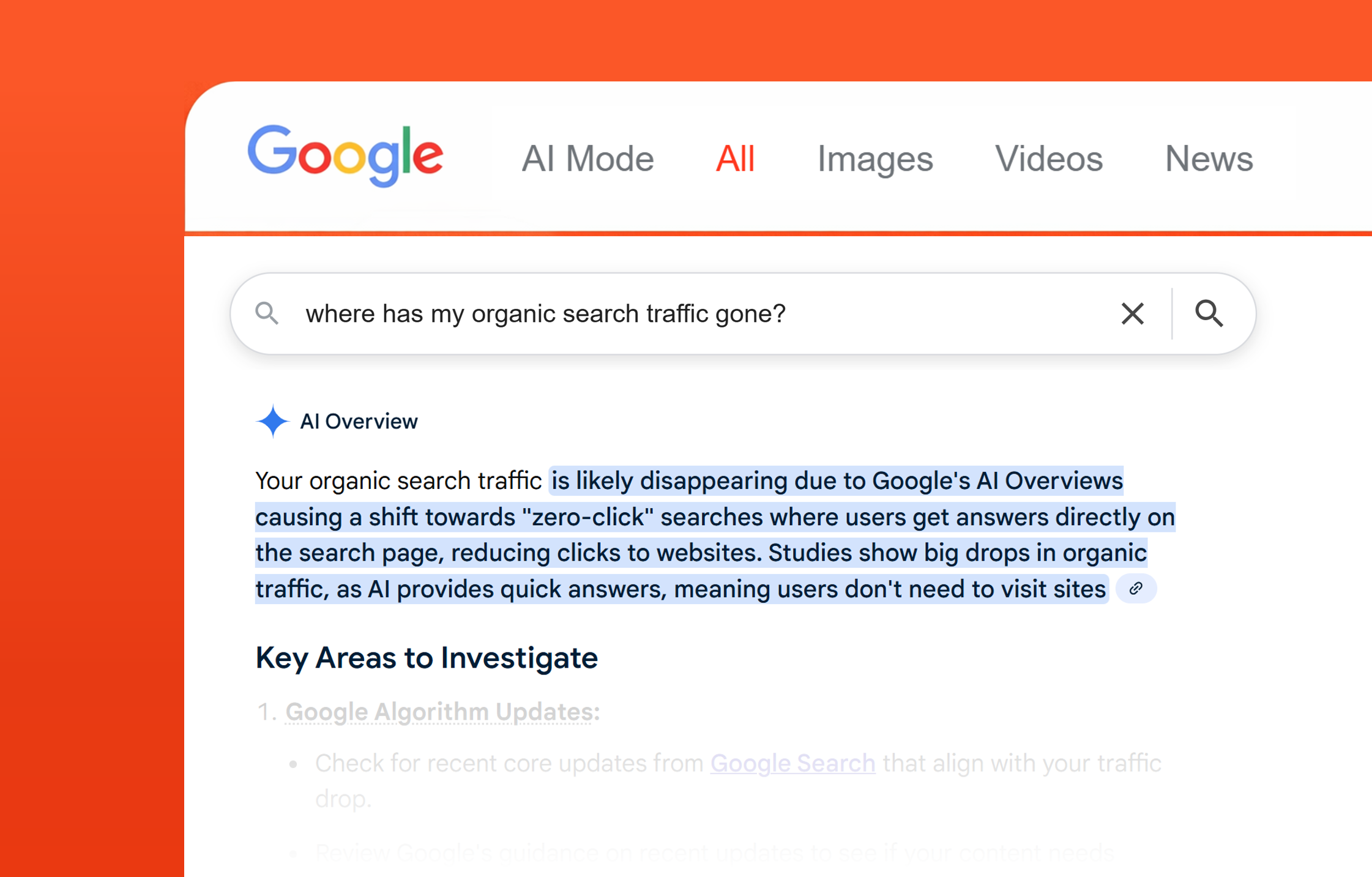
Over the past year, we’ve been able to measure the true impact AI is having on organic search, and the scale of the change is huge.
Normally, when organic search traffic drops, it’s because of an algorithm update, a technical change, or a competitor doing something better than us. These are problems we can analyse, respond to, and usually fix. But this time it’s different. This isn’t something we can simply optimise our way out of.
What we’re seeing isn’t a temporary fluctuation or a ranking problem. It’s a change in how people access information, and that has far-reaching consequences for organic search.
The timeline of change
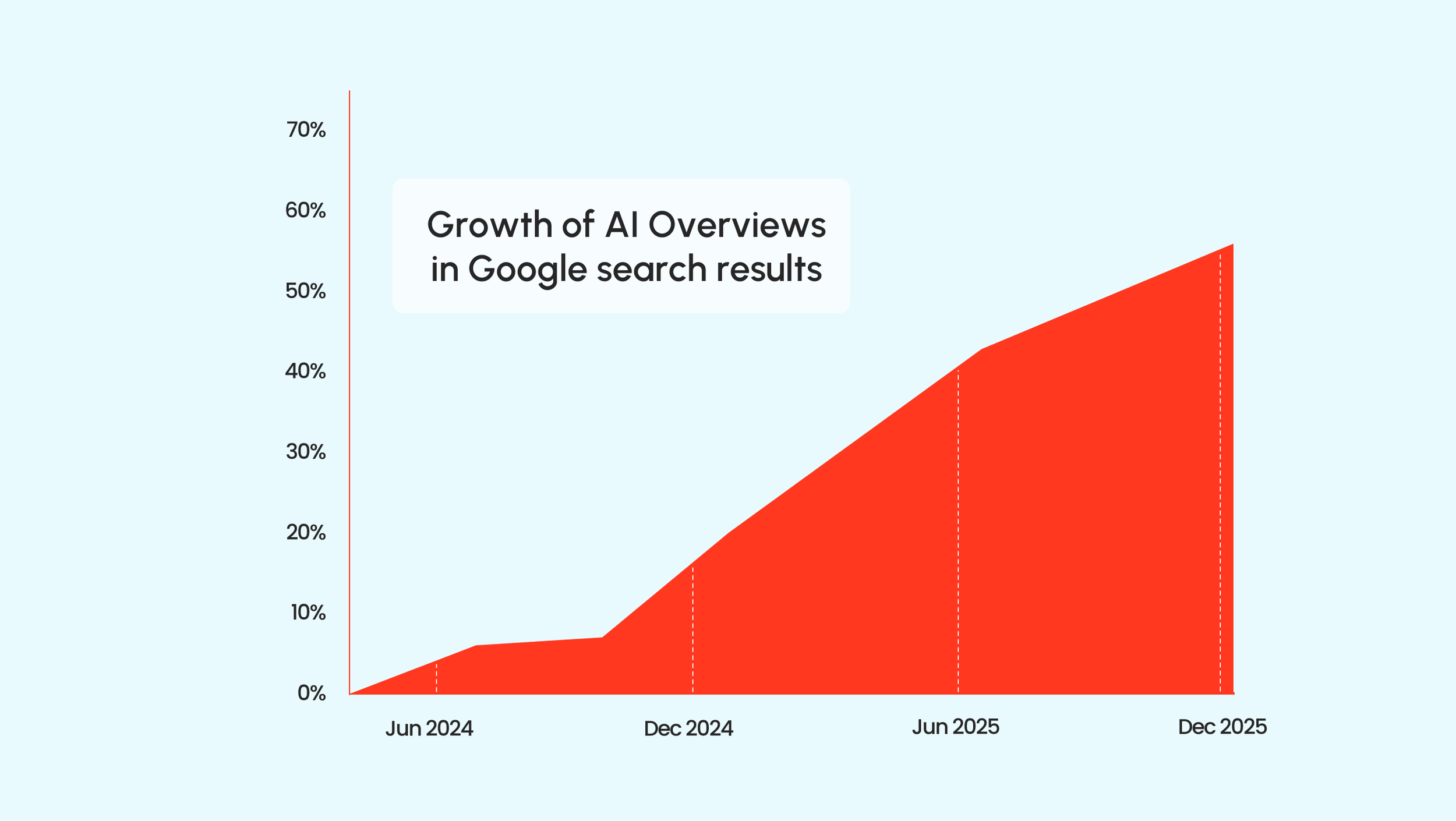
The shift started in late spring 2024, when Google began testing AI Overviews in the UK. At first, they appeared sporadically. They were easy to overlook and dismiss as a temporary experiment.
By autumn that year, it was clear they weren’t going away. AI Overviews were showing up more consistently, across a wider range of queries. By December 2024, they appeared on roughly 20% of search results. As we now move into 2026, that figure has risen to around 55% of queries - based on a combination of industry tracking and observed search engine result page (SERP) data.
For informational searches, where someone is simply looking for an answer or explanation, coverage is now close to universal.
This alone would be enough to reshape organic search. But it isn’t happening in isolation.
The rise of AI platforms
At the same time Google was integrating AI Overviews directly into the results page, people were also changing how they look for information more broadly.
The use of dedicated AI platforms has moved quickly from curiosity to habit. At the beginning of 2025, ChatGPT had around 400 million weekly users. More recent figures put that number at nearly 900 million.
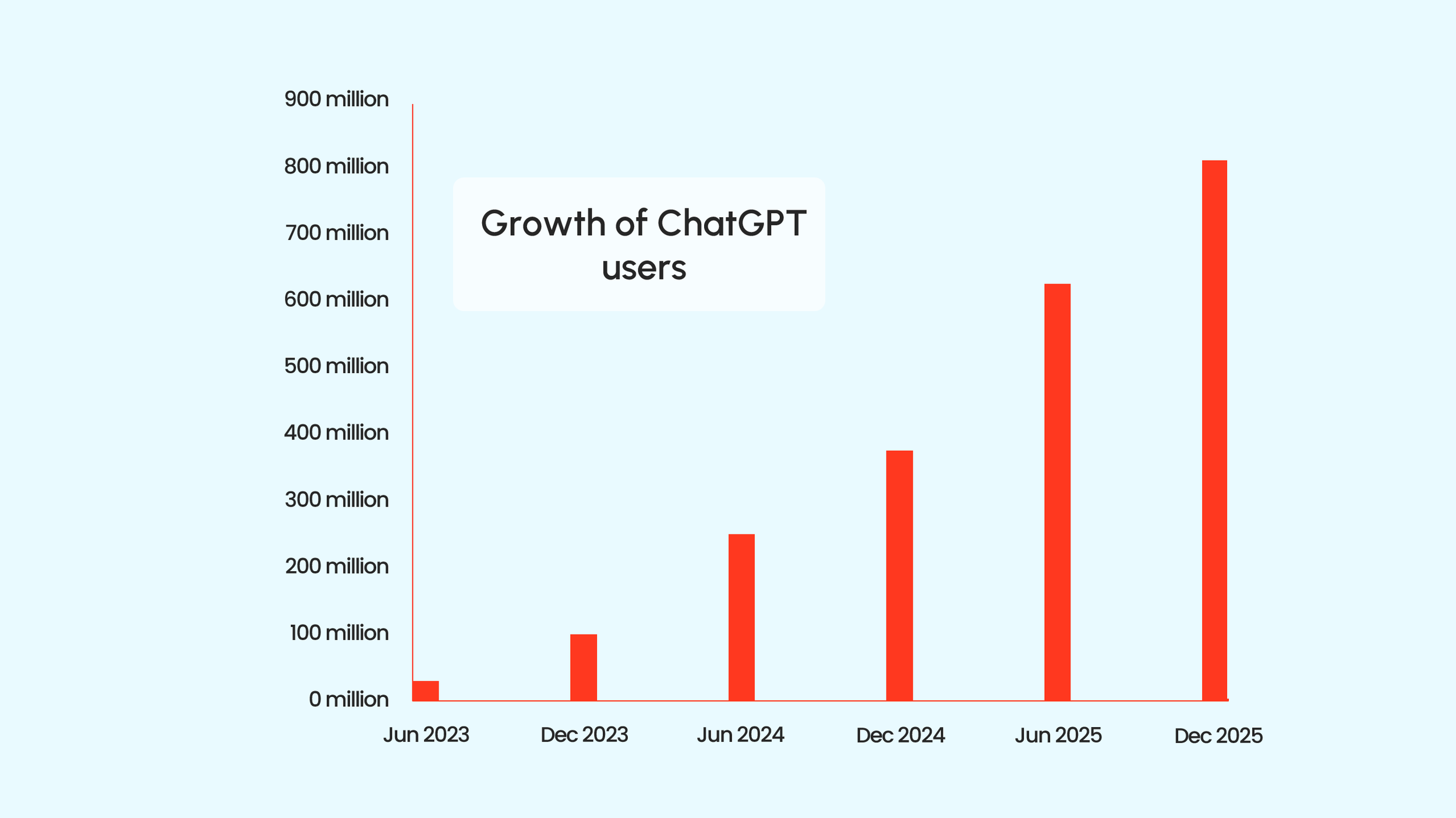
That kind of growth reflects a clear shift in how people seek information.
As usage of other platforms such as Gemini and Copilot has grown alongside it, an increasing share of information-seeking queries now never reach traditional search results at all. Users are getting answers either from Google’s AI Overviews at the top of the results page, or directly from AI platforms themselves. The websites that previously benefited from that demand are often no longer part of the journey.
The impact on website traffic
The impact on organic search traffic has been severe.
When a query triggers an AI Overview, many sites are losing well over half of the organic traffic they previously received. Across multiple datasets and case studies, declines of 60% or more are now common for affected queries.
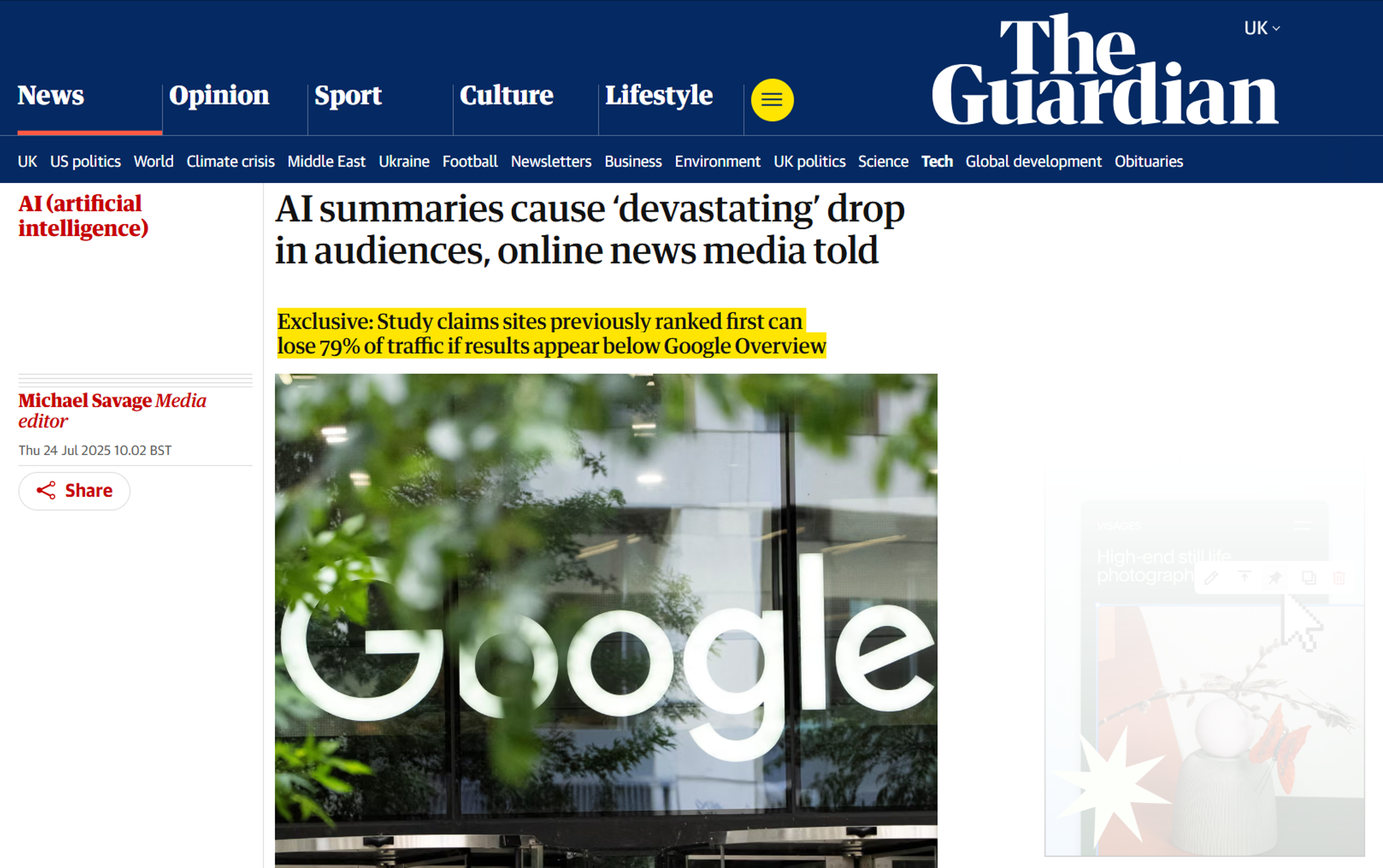
For sites that historically ranked at the very top, the ones that invested most heavily in content, links, and search engine optimisation, the impact is often even more pronounced. The Guardian recently reported that some pages ranking first in the traditional organic search results are losing close to 80% of their traffic.
These figures aren’t universal and the exact scale varies by industry, query type, and site. But where a search is primarily informational and can be answered confidently by AI, the loss of clicks is consistently significant.
Since the beginning of SEO, first position in the traditional organic search results has been the clearest signal of success. Today, even when you achieve it, the return is often a fraction of what it once was.
The reality of AI citations
In response, many SEOs are focusing on visibility inside AI-generated answers. Increasing mentions and links in AI responses is becoming part of the strategy.
That is the right thing to do. It just needs to be understood clearly.
A report recently shared on Search Engine Land shows that AI-driven referrals to websites remain minimal. Most users read the answer and move on. Links inside AI responses rarely result in meaningful website traffic.
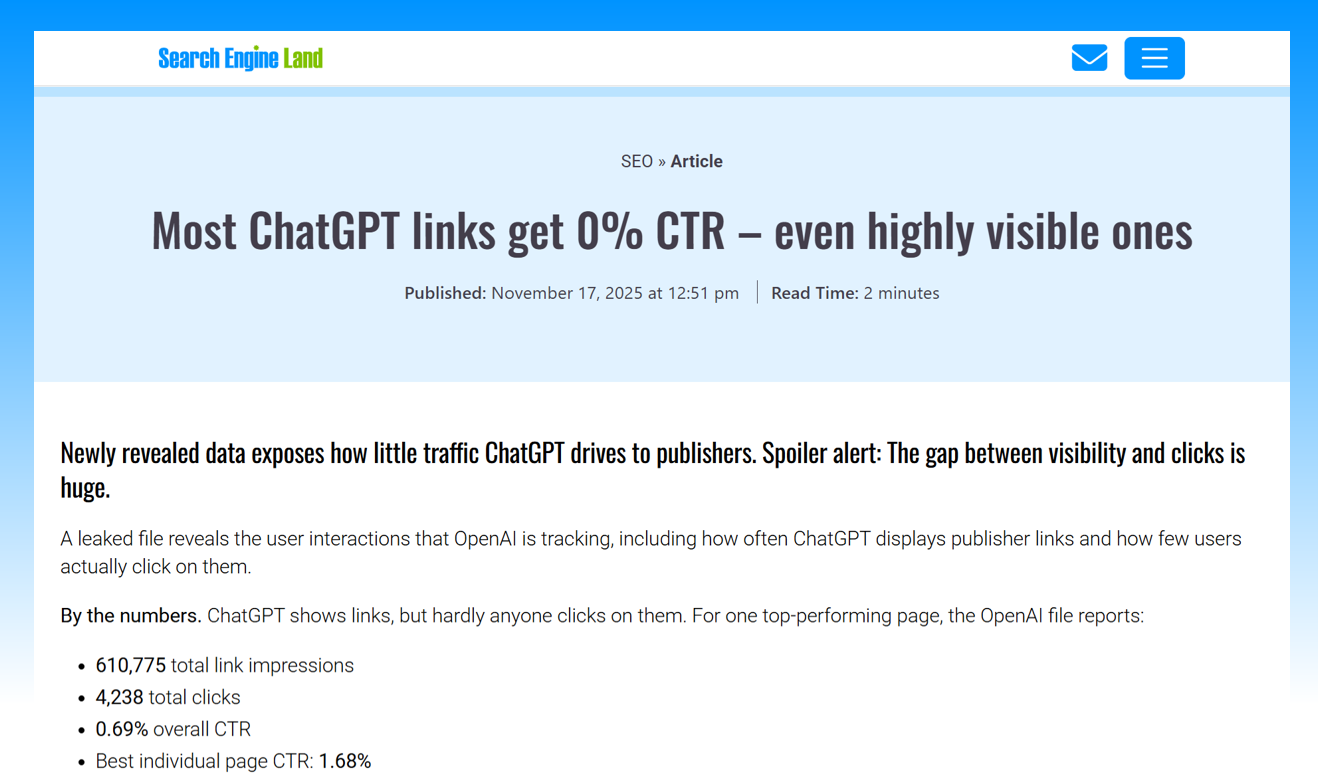
Low click-through rates are expected. It’s how these platforms are designed to work. Their goal is to resolve the query, not to send users on.
Being mentioned or linked in an AI answer can still carry brand value and credibility. But it won’t drive website visits or replace lost organic search traffic.
Where SEO still plays a role
None of this means SEO has stopped mattering. But its role has changed.
High-intent commercial and transactional queries, where there a less AI Overviews, still drive clicks. When people are comparing options, evaluating products, or ready to act, they still visit websites. Brand-led search also remains valuable.
SEO continues to matter for visibility and credibility in places where content is still being surfaced, referenced, and reused, including AI-generated answers that rely on crawlable, authoritative sources.
What has changed is predictability. For informational queries, the old relationship between rankings and traffic no longer holds. High rankings no longer guarantee meaningful demand. If your strategy depended heavily on those clicks, the ground has shifted beneath it.
What needs to change
If your business previously relied heavily on organic traffic from informational search, diversifying your marketing is now essential.
The era of informational SEO as a reliable primary traffic driver has gone, and there’s little evidence it’s coming back in its previous form. This isn’t something that can be fixed with better execution or more content. It reflects a structural change in how people access information.
Informational organic search is no longer a dependable growth channel on its own, and treating it as one is now a business risk.
Adapting to that reality, by broadening how and where you generate demand, may be some of the most important marketing work you do in 2026.