
AI market share and click-through rates - what the data shows
4 minute read ● Summarise this post with ChatGPT
In recent posts I’ve covered AI's impact on organic search traffic and how to optimise for LLM visibility. Both showed that AI is answering more queries and fewer users are clicking through to websites, meaning visibility in AI results is better understood as a brand signal rather than a traffic channel. In this post, I’ll share some of the latest data that supports this.
Where people are actually searching
The starting point is understanding where AI-assisted search is actually happening - because the market share data most people look at only tells part of the story.
Data shared by StatCounter shows us that ChatGPT holds around 70% of the UK AI tool market share. Copilot and Perplexity trail behind with 10% and 8% respectively, highlighting how concentrated the market currently is.
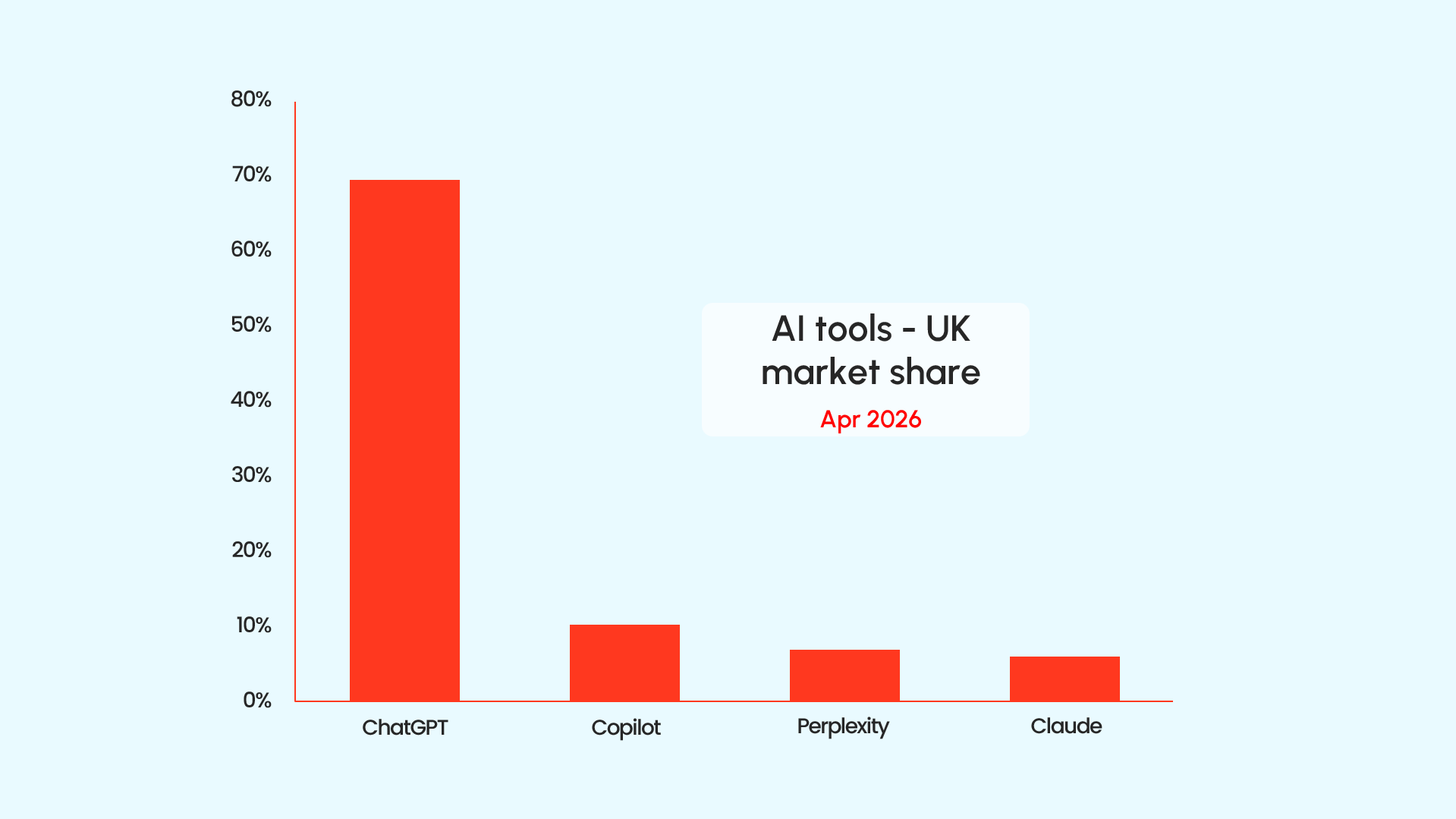
But this data has a significant blind spot, as it only shows standalone AI tools. It doesn't capture Google's AI Overviews or AI Mode, because these sit inside Google Search itself. So when someone gets an AI-generated answer on Google, it's recorded as a standard search, not as AI tool usage.
The scale involved makes this significant. In the UK, Google receives roughly twenty users for every one user to ChatGPT:
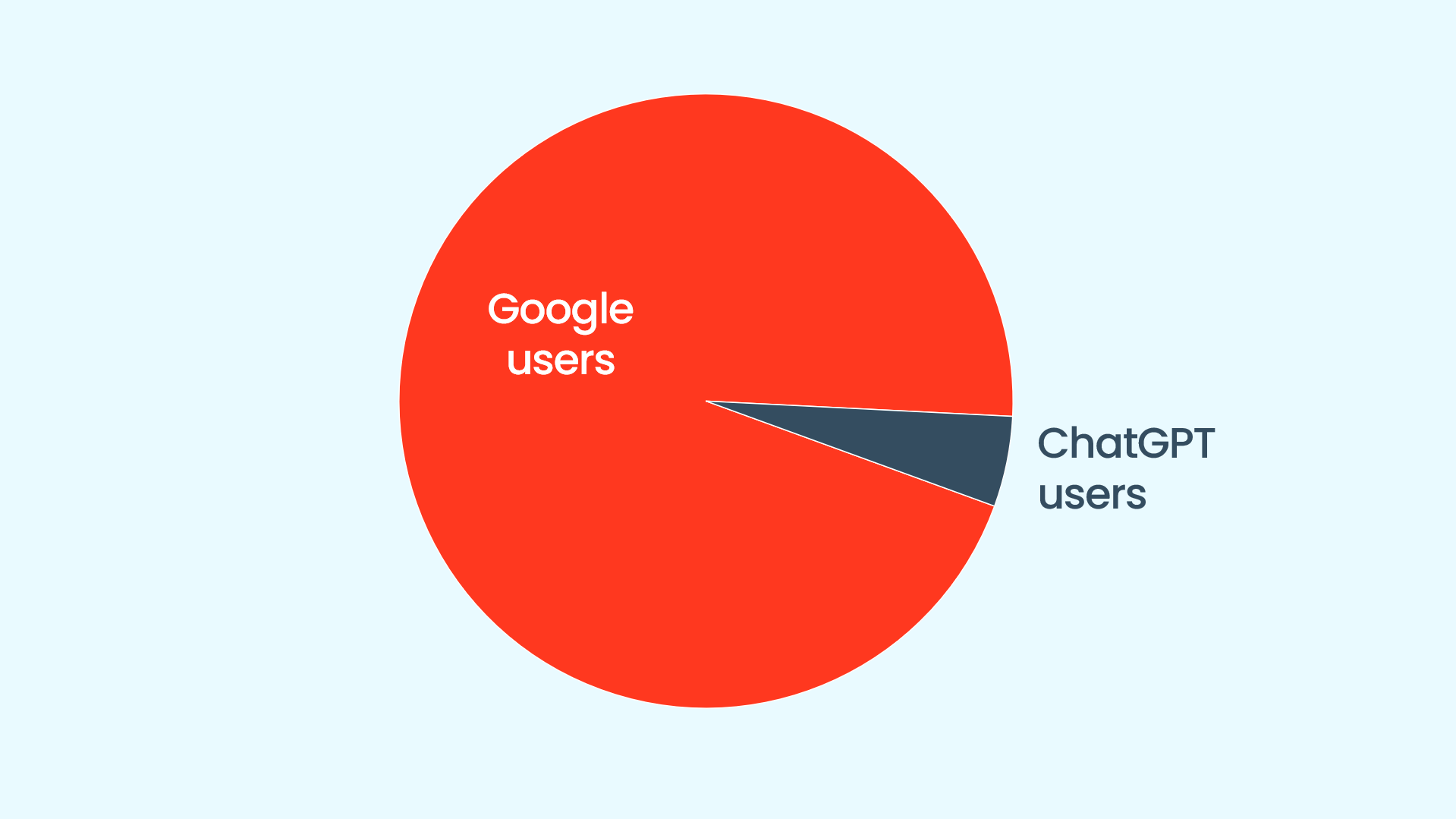
And with AI Overviews appearing on around 55% of Google queries (and nearly all informational queries) it means most AI-assisted search is happening on Google, not ChatGPT - it's just invisible in the AI tool market share figures.
So the realistic priority order for visibility is Google's AI features first, ChatGPT second, then Perplexity and Copilot at some distance behind.
What click-through rates look like across each
Understanding where searches happen is one thing, but what happens next is where the picture becomes clearer.
We know that most AI searches happen on Google. But Google AI Overviews only have a CTR of around 1% according to Pew Research's data. So for the largest AI search platform, 99 out of 100 queries will be answered without clicking through to a website.
Google's AI Mode doesn't have widely published CTR data yet, but its design is more conversational, with fewer links surfaced. This would indicate a lower click rate than AI Overviews. Estimates put the CTR at somewhere between 0.1% and 1%, but in most cases likely towards the lower end of that range.
ChatGPT has been measured more directly. Search Engine Land reported a 0.69% CTR across a large dataset recently.
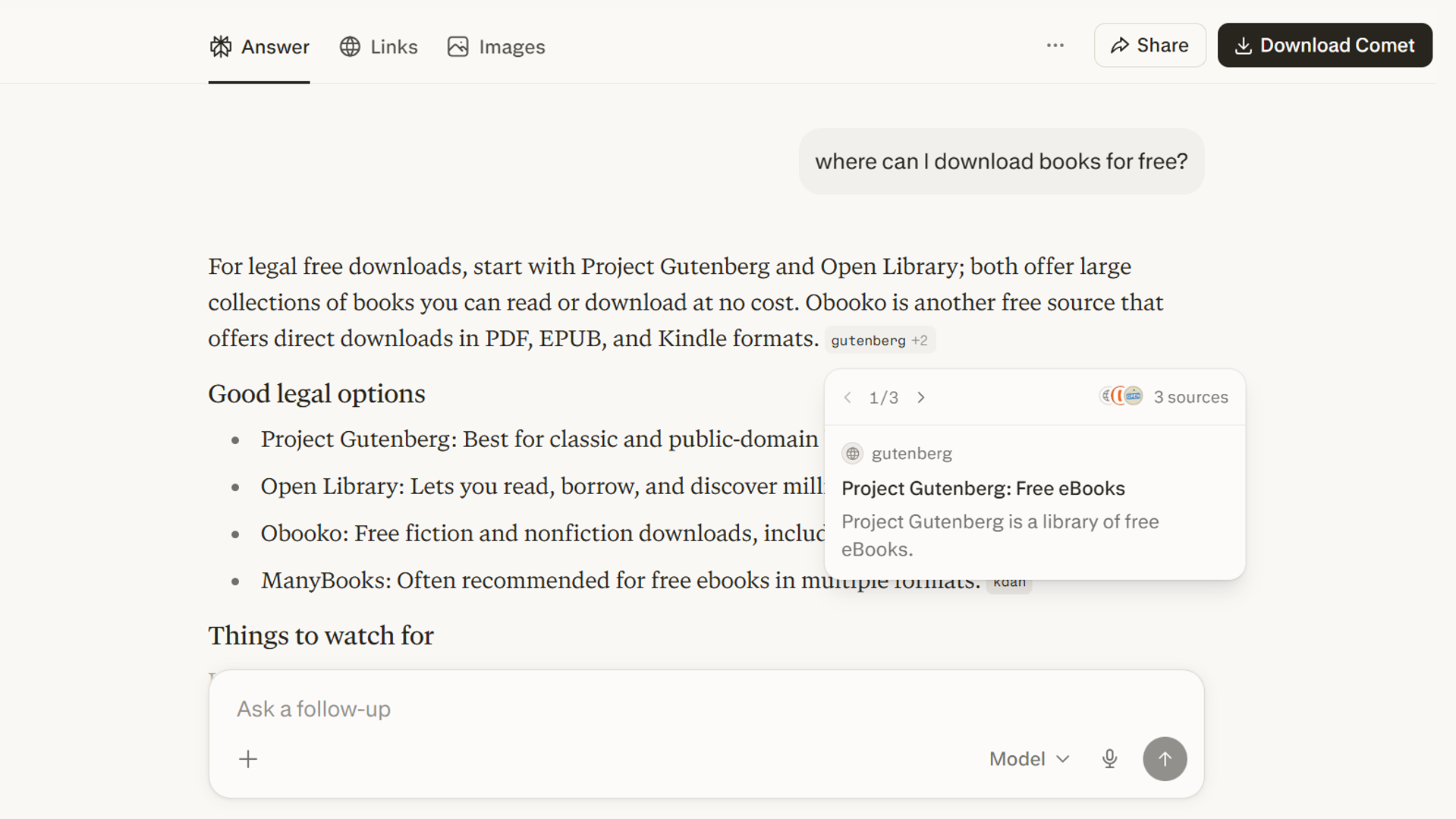
Perplexity is designed to give citations more visibility than other AI engines, which is meant to encourage greater click behaviour. Even so, estimates still put it at somewhere between 0.6% and 1% CTR - broadly similar to ChatGPT despite the more prominent link design:
Microsoft Copilot sits lower, with early case studies suggesting a 0.1% to 0.3% CTR for brand mentions.
What this confirms
Across every AI platform and feature, the pattern is the same: AI resolves queries rather than refrering users onward.
This is how these products are designed, and it has a direct implication for how AI visibility should be measured and communicated - it’s a brand and awareness function. Holding it to a traffic metric it was never designed to meet sets the wrong expectation.